
Rescue Diver
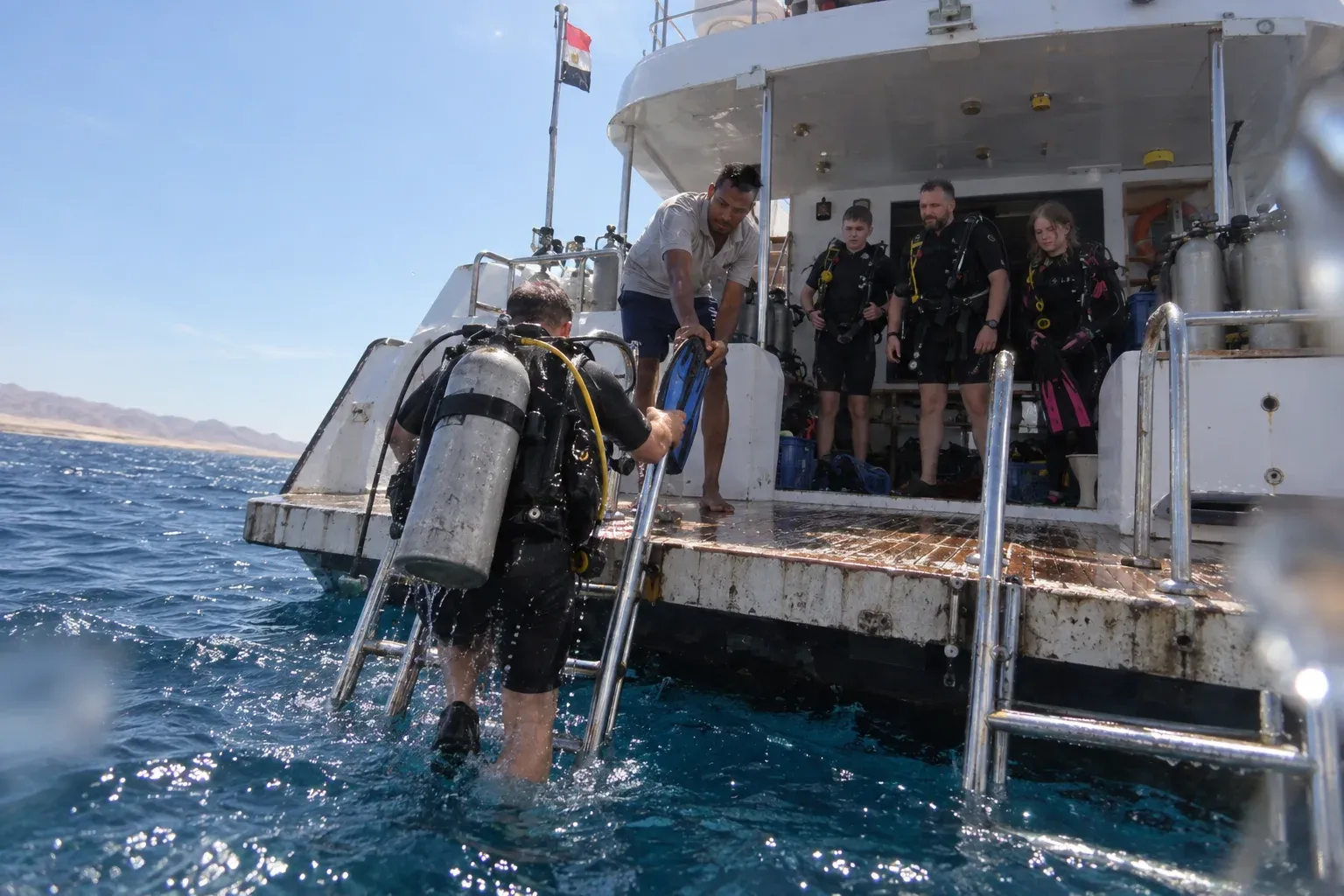
Learn to prevent and manage diving emergencies. Over 3 days you'll practise self-rescue, recognise and assist stressed divers, perform tired-diver tows, manage panicked divers at the surface, and orchestrate a missing-diver search. You'll finish a calmer, sharper, more confident diver — the kind every dive buddy wants beside them.
Group size: 2
- Duration
- 3 Days
- Total dives
- 4
- Group size
- 2
Hurghada, Makadi Bay, Sahl Hasheesh, El Gouna and Soma Bay. Pickup and return included.
Compare certification prices
Choose from the agencies available for this course. The price shown is for the complete course with that agency.
 €410
€410 €380
€380 €380
€380Included
Included
- Digital learning materials
- Full equipment for the course
- 4 open water rescue scenarios
- Certified Rescue Instructor
- Hotel pickup and drop-off
- Hot lunch and soft drinks on every dive day
- Dive insurance
- International certification card
Additional costs
- EFR (CPR & First Aid) course if needed (€90)
- Tips (optional)
- Diving camera rental (€20/day)
Min age: 12+
- Advanced Open Water Diver (or equivalent)
- Underwater Navigation specialty (or part of AOW)
- Current CPR & First Aid (we offer EFR — see add-on)
Your day, made simple
- 1 Day 1
Theory + self-rescue
Morning classroom: stress recognition, accident management theory, equipment problems, decompression illness. Afternoon: self-rescue exercises in confined water — cramp removal, weight ditching, regulator recovery under stress.
- Stress theory
- Self-rescue
- Equipment failures
- 2 Day 2
Surface and underwater rescues
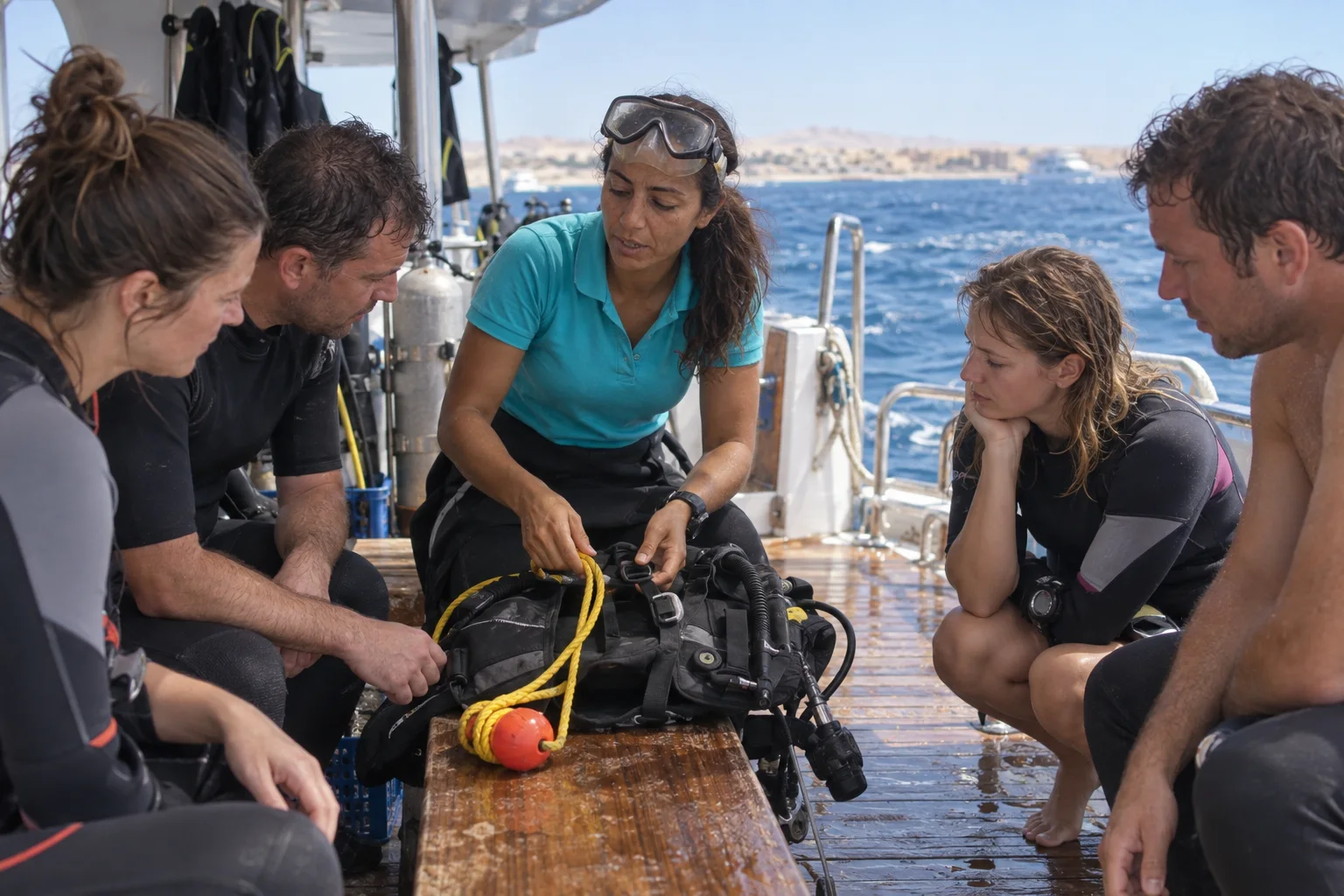
Boat day. Tired diver tow, panicked diver at the surface (with instructor playing the panicked diver — convincingly), missing diver underwater, search patterns, controlled lift of an unresponsive diver.
- Surface tow
- Panicked diver
- Search patterns
- 3 Day 3
Scenario day
Full-scale unannounced scenarios. You and your buddies must respond to a range of incidents the instructor stages without warning — coordinate the response, manage casualties, deliver rescue breaths in the water, evacuate to the boat.
- Surprise scenarios
- Team coordination
- Final certification
What you'll be able to do
- Self-rescue and stress management
- Recognising and helping a stressed diver
- Tired-diver tows (multiple methods)
- Panicked diver at surface — approach and control
- Missing diver search patterns
- Unresponsive diver rescue and in-water rescue breathing
- Exits and on-boat first aid
- Accident management and emergency action plans
View details
Why divers love this course
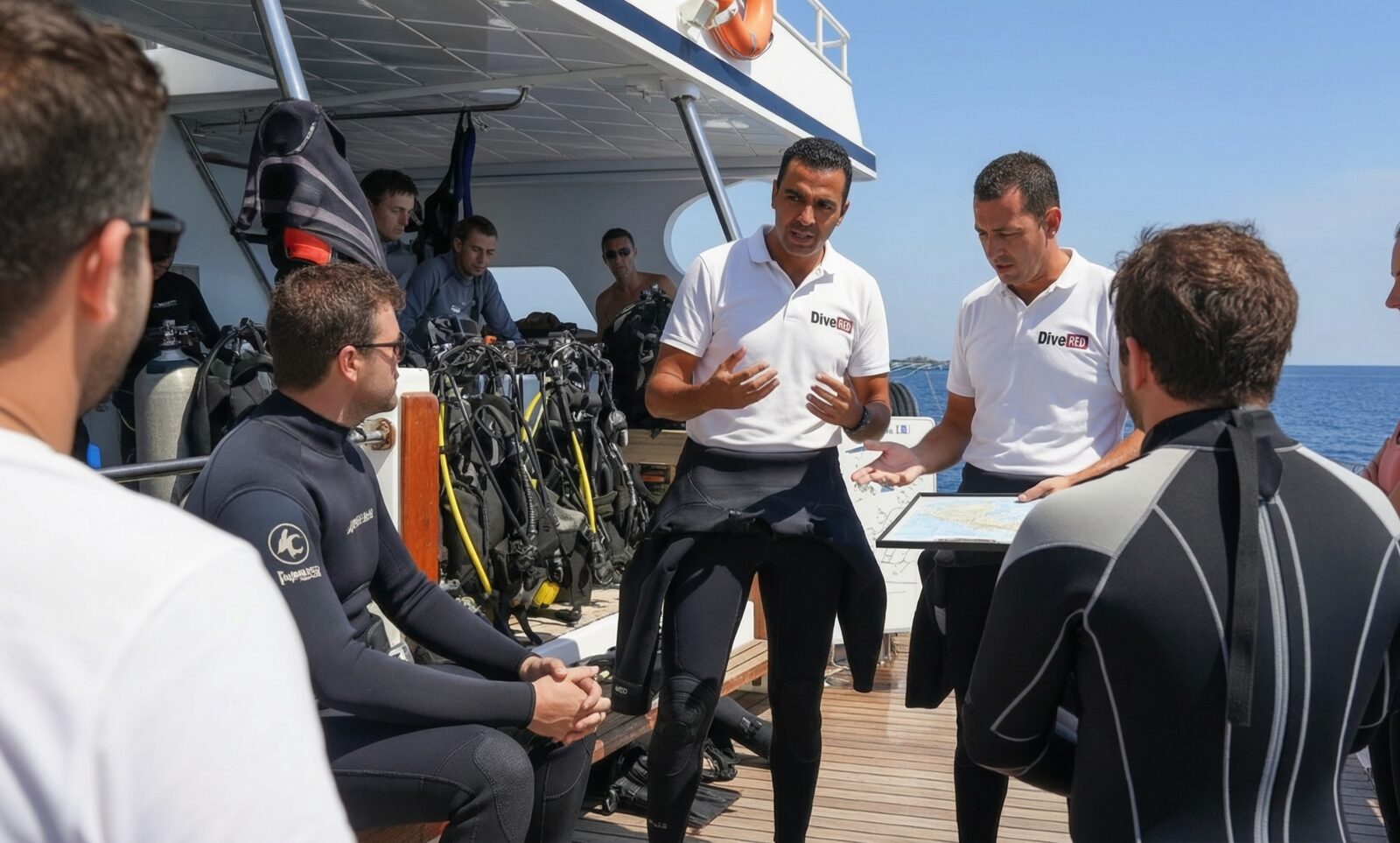
Ask any working dive professional which course transformed them most as a diver, and the answer is almost always 'Rescue'. Not because the techniques are exotic — they're not — but because it's the first course that takes you out of your own head and asks you to be aware of the divers around you. Three days of looking outward instead of inward, and your diving will never be the same.
FAQ
Do I need a CPR certification before I start?
Yes — but if you don't have one, we run the EFR (Emergency First Response) course as an add-on for €90, usually the day before your Rescue course begins.
How fit do I need to be?
Reasonably fit. The hardest physical skill is towing an unresponsive diver in full kit for 50 m at the surface while removing their gear and giving rescue breaths. It's tiring but well within reach for the average diver.
Is this the path to becoming a Divemaster?
Yes — Rescue Diver is the prerequisite for any professional diving qualification. If you're considering working in diving, this is the threshold.
Read guest reviews
"We had an amazing experience with Azure Diving Club! Aladdin and Mohamed were incredibly kind, knowledgeable and patient with first-time divers. They made us feel completely safe and comfortable, while keeping the atmosphere relaxed and enjoyable. Thank you both for a fantastic experience — we're coming back many times!"
"Very good, happy diving instructors, and true gentlemen. Totally worth it!"
"I did my Open Water Course with Aladdin and really enjoyed the experience. Every day was different. The coral reefs were beautiful and I really enjoyed my experience! Will be coming back!"